Sam Altman’s Ethical AI Playbook: Balancing Innovation and Responsibility
A practical guide to sam altman’s ethical ai playbook: balancing innovation and responsibility, with practical steps and examples for founders.
The Capitaly Team6 min read
I’m breaking down each part of Sam Altman’s approach to ethical AI-diving into the why and how, then capping each section with bullet-point summaries. Plus, I’ve embedded links to every relevant page on Capitaly.vc so you can explore deeper as you go.
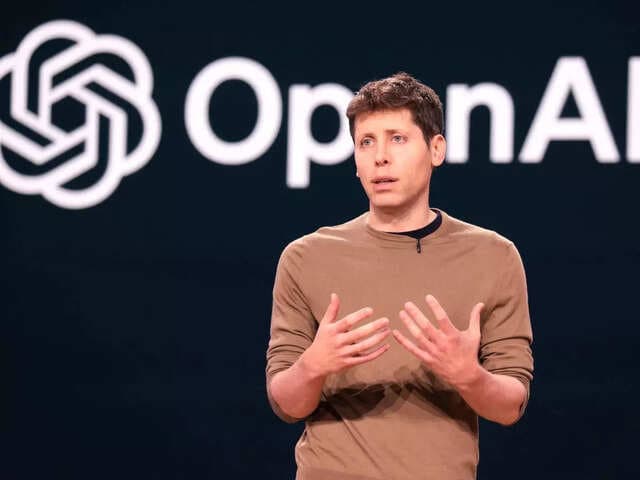 Sam Altman’s Ethical AI Playbook: Balancing Innovation and Responsibility
Altman’s Definition of “Ethical AI” in 2025
Detailed Explanation: Sam reframes ethics as a proactive design goal. Rather than “don’t break stuff,” ethical AI must:
- Respect human rights-uphold privacy (Privacy Policy), ensure fairness, preserve autonomy.
- Deliver social benefit-solve real problems (health, climate, education) at scale.
- Preemptively mitigate harm-anticipate risks and embed safeguards.
Bullet Summary:
- Rights first: embed privacy & fairness
- Benefit at scale: tackle tangible challenges
- Risk foresight: build-in safety
OpenAI’s Internal Ethics Review Process
Detailed Explanation: Before any feature ships, OpenAI runs a three-phase ethics deep-dive:
- Red Teaming-simulate misuse, bias drills, security attacks (akin to our Security audits for partners).
- Cross-Functional Panels-engineers, ethicists, legal experts debate edge cases (mirroring our Advanced plan risk reviews).
- Public Feedback Trials-beta rollouts to real users, gather input, then iterate (similar to our /checkout beta flow).
Bullet Summary:
- Simulated attacks uncover hidden flaws
- Multi-discipline review balances perspectives
- Real-user testing before launch
Case Study: Handling ChatGPT’s Bias Allegations
Detailed Explanation: When bias allegations arose, Sam’s team acted swiftly:
- Public acknowledgment-candid apology on social channels.
- Rapid mitigation-model patch in 48 hours.
- Full transparency-released a detailed report on data sources and retraining steps.
Bullet Summary:
- Own the mistake publicly
- Patch fast-48-hour turnaround
- Share the fix openly
Altman’s Stance on AI Regulation vs. Self-Policing
Detailed Explanation: Sam sees regulation as inevitable but won’t wait. OpenAI:
- Builds internal guardrails (automated bias detectors, usage caps, human-in-the-loop).
- Partners with policymakers and NGOs for nuanced laws-avoiding blanket bans.
- Shares best practices in our Guides category.
Bullet Summary:
- Self-police now with internal controls
- Collaborate on smart regulations
- Publish playbooks in Guides
The No-Ads Philosophy: Why Ads Are “Dystopian”
Detailed Explanation: Ads corrupt AI’s purpose:
- Models chase clicks over truth.
- Privacy erodes under targeted profiling.
- Hidden biases favor high-paying advertisers.
OpenAI opts for subscriptions and enterprise licensing (check our Standard plan or Sign Up).
Bullet Summary:
- No conflict with user trust
- Protect privacy from ad profiling
- Revenue via subscriptions & API
Transparency in AI Training Data Sourcing
Detailed Explanation: You deserve to know what fed the AI. OpenAI:
- Publishes dataset origins on GitHub.
- Labels public vs. private sources.
- Documents aggregation and cleaning methods.
Bullet Summary:
- Provenance shared openly
- Source labels for clarity
- Methods fully documented
Mitigating Job Displacement Fears in AI Rollouts
Detailed Explanation: AI advancement spooks workers. Sam’s solution:
- Upskilling grants via platforms (see our Basic plan learning resources).
- Human-in-the-loop roles to oversee AI decisions.
- Transition support for evolving career paths.
Bullet Summary:
- Fund education for workforce
- Create oversight jobs
- Support transitions proactively
Altman’s Collaboration with Global Policy Makers
Detailed Explanation: Altman sits at the table with:
- EU AI Council-shaping the AI Act.
- U.S. National AI Initiative-influencing federal guidelines.
- UNESCO ethics forums-establishing global norms.
Bullet Summary:
- EU involvement
- U.S. partnerships
- UNESCO engagement
Ethical Dilemmas in AI-Powered Search
Detailed Explanation: Are AI answers facts or hallucinations? To solve:
- Confidence scores show certainty.
- Source links back to original material.
- Flags for low-confidence content.
Bullet Summary:
- Confidence indicators
- Direct citations
- Alerts for uncertainty
ChatGPT’s Fact-Checking Mechanisms Explained
Detailed Explanation: Under the hood, OpenAI uses:
- A low-confidence classifier to flag guesses.
- Retrieval plugins for live data (like our Google Sheets integration).
- A user correction loop-your feedback trains future models.
Bullet Summary:
- Classifier flags weak responses
- Plugins fetch fresh data
- User edits improve accuracy
Balancing Open Source Ideals with Profit Motives
Detailed Explanation: OpenAI funds safety research by:
- Publishing free papers and small models.
- Charging for enterprise API access.
- Supporting community tools via our Tools category.
Bullet Summary:
- Open research fuels innovation
- API licensing sustains dev
- Community tools remain free
Altman’s Warnings About AGI
Detailed Explanation: AGI could be our best or worst invention. Altman:
- Funds alignment research heavily.
- Promotes a Global AGI Safety Coalition.
- Demands transparent progress reports.
Bullet Summary:
- Align before scale
- Global coalition
- Transparent milestones
How OpenAI Audits Third-Party AI Implementations
Detailed Explanation: Every partner must:
- Submit a risk assessment.
- Pass annual security audits.
- Share usage logs.
Much like our Zapier integration compliance checks ensure safe data flow.
Bullet Summary:
- Risk assessments upfront
- Yearly audits mandatory
- Log reviews ongoing
The Role of User Feedback in Ethical Iterations
Detailed Explanation: OpenAI invites you to shape ethics via:
- In-app bias ratings.
- An ethics forum on our Blog.
- Monthly town halls.
Bullet Summary:
- Rate bias in-app
- Join the forum
- Attend town halls
Altman vs. Zuckerberg: Contrasting AI Ethics Visions
Detailed Explanation:
- Altman: “Move carefully, build guardrails, partner on policy.”
- Zuckerberg: “Move fast, ship, patch later.”
Bullet Summary:
- Altman: safety-first
- Zuck: speed-first
Environmental Impact of AI: Sustainability Pledges
Detailed Explanation: Training AI is energy-heavy. OpenAI commits to:
- Carbon-neutral training by 2026.
- Efficient architectures to reduce compute.
- Renewable energy credits.
Bullet Summary:
- Neutralize carbon
- Optimize models
- Invest in renewables
Handling Misinformation in AI-Generated Content
Detailed Explanation: To fight fake news, ChatGPT:
- Tags claims with source attributions.
- Uses real-time fact feeds.
- Runs automated misinformation detectors.
Bullet Summary:
- Attributions on every claim
- Live fact feeds
- Auto-flags false info
Altman’s Red Lines: Forbidden Use Cases
Detailed Explanation: OpenAI’s license bans:
- Autonomous weapons.
- Mass surveillance.
- Hidden data harvesting.
See full terms in our /terms-of-service.
Bullet Summary:
- No weapons
- No surveillance
- No stealth data
Ethical Monetization Models Beyond Ads
Detailed Explanation: OpenAI explores:
- Tiered subscriptions (Free → Pro → Enterprise).
- Pay-what-you-can for nonprofits.
- Token microtransactions.
Bullet Summary:
- Subscription tiers
- Nonprofit pricing
- Microtransactions
The Future of AI Ethics: Altman’s 2030 Predictions
Detailed Explanation: By 2030, expect:
- A Global AI Safety Treaty.
- Industry ethics certifications.
- In-house AI ethicist roles.
Bullet Summary:
- Safety treaty worldwide
- Certification seals
- Ethicist positions
Call to Action
Found this playbook useful? Sign Up or Log In to raise capital at AI speed-then explore:
- 15 Best Cold Email Templates
- 5 Steps to an Outstanding Capital Plan
- Calling All Founders: Pro Fundraising Tips
Raise smarter. Raise faster. Raise with AI.
Internal Link Map
- Home: https://www.capitaly.vc
- Blog: /blog
- Checkout: /checkout
- Order Confirmation: /order-confirmation
- PayPal Checkout: /paypal-checkout
- Search: /search
- Terms of Service: /terms-of-service
- Privacy Policy: /privacy-policy
- Log In: /log-in
- Sign Up: /sign-up
- Reset Password: /reset-password
- Update Password: /update-password
- Access Denied: /access-denied
- User Account: /user-account
Categories & Teams
- Advanced Category: /category/advanced
- Basic Category: /category/basic
- Standard Category: /category/standard
- Team - Alex Carter: /team/alex-carter
- Team - Amy Smith: /team/amy-smith
- …(and others)
Products & Integrations
- Product - Advanced: /product/advanced
- Product - Basic: /product/basic
- Product - Standard: /product/standard
- Airtable Integration: /integration/airtable
- Google Sheets Integration: /integration/google-sheets
- …(and others)
Feel free to explore any link above for deeper insights into Capitaly.vc’s offerings!